Analysis by Hikaru Sakamoto
FIFA is set to trial a new rule aimed at stopping players from faking injuries to waste time — and it’s a big one.
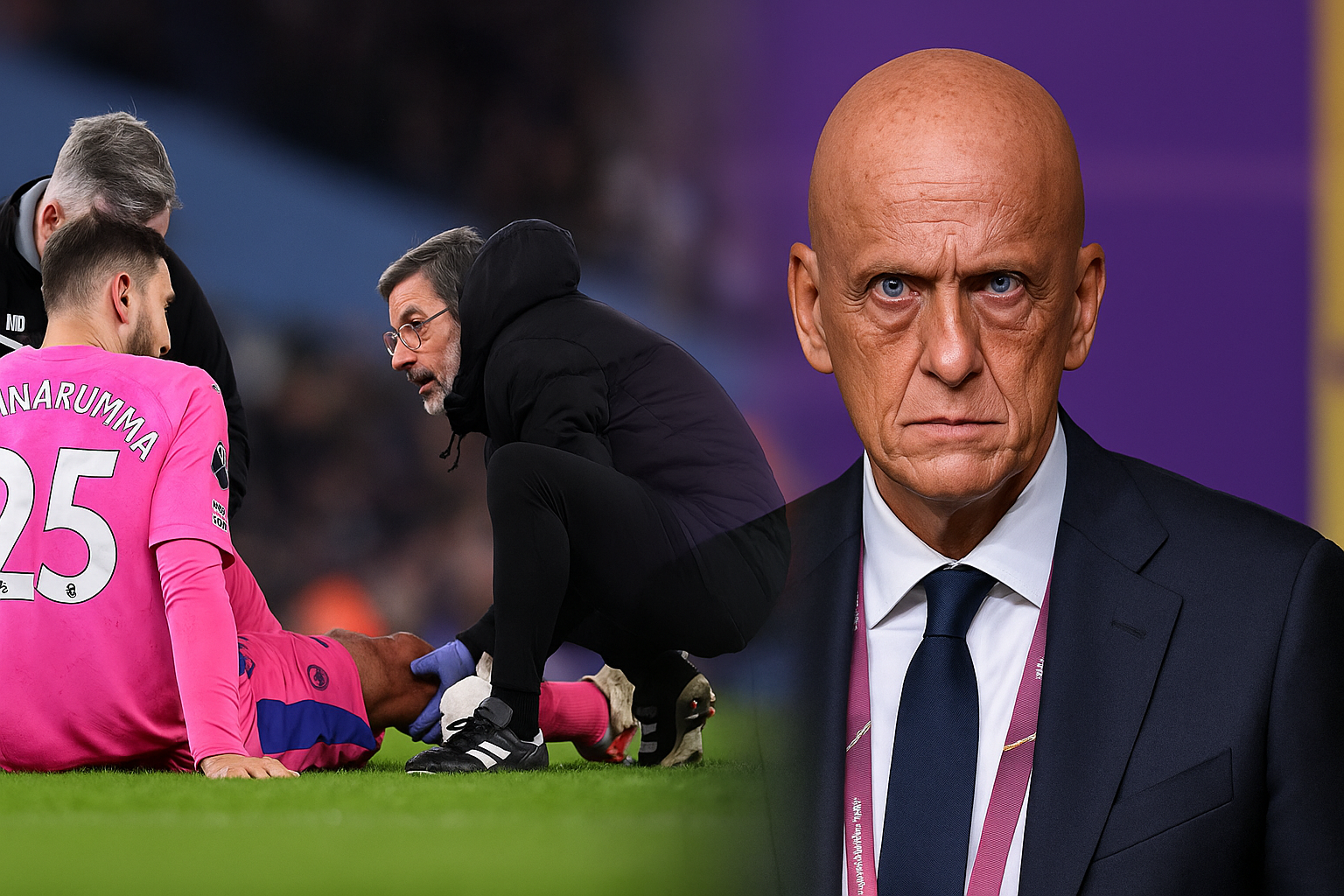
Pierluigi Collina, the head of FIFA’s Referees Committee, told Qatar’s Al Kass on November 28 that the upcoming FIFA Arab Cup in December will introduce a test rule:
👉 If a team doctor enters the pitch, the treated player must stay off for 2 minutes before returning.
The idea is simple — stop players from pretending to be hurt just to slow the game down.
🔍 How the 2-minute rule works (in simple terms)
- A player who receives on-field treatment must remain off the pitch for 120 seconds.
- During that time, the team plays with 10 men.
- Exceptions:
- Goalkeepers
- Players about to take a penalty
- Players fouled in actions that result in a yellow or red card to the opponent
In short: If you go down and need medical help, your team temporarily loses a player.
This dramatically reduces the incentive to exaggerate injuries.
🌍 Trial begins at the FIFA Arab Cup
The Arab Cup in Qatar features nations like Morocco, Egypt, and Syria.
Japan also has referee Junpei Iida participating as part of the VAR team.
Feedback from this tournament will determine whether FIFA moves forward with officially adding the rule to the Laws of the Game.
🧤 Separate proposal: Outfield player removal during goalkeeper treatment
According to the BBC, IFAB (the body that writes the Laws of the Game) is also discussing another idea:
👉 If a goalkeeper receives medical treatment, one outfield player must leave the pitch for 30 seconds.
Why?
Recently in the Premier League, Manchester City used the time during their goalkeeper’s treatment to hold a mini tactical meeting — which Leeds’ manager blasted as “a clear act of gamesmanship.”
Because goalkeepers cannot be forced off the pitch during treatment, IFAB wants to prevent teams from using these moments as tactical timeouts.
Another idea being discussed:
- Banning players from running to the bench for tactical talks during stoppages.
These discussions may lead to a wider update of the Laws of the Game.
The Bigger Picture
A practice everyone has recognized for years — and quietly ignored — is finally being confronted head-on.
Time-wasting through exaggerated injuries has become so routine that it barely raises eyebrows anymore. That is precisely what this proposed “two-minute rule” is targeting. As many of the reactions point out, the real issue has never been the minutes lost on the clock, but the loss of momentum. Dangerous counterattacks are halted, sustained pressure evaporates, and a team’s rhythm is completely broken. Adding seven or eight minutes of stoppage time later does nothing to restore what was destroyed in that moment. The frustration supporters feel comes from this fundamental sense of imbalance.
This is why the involvement of Pierluigi Collina carries real weight. To most fans, he is not just a legendary former referee remembered with nostalgia. He is someone who understands, from firsthand experience, how matches are manipulated in real time. The exemption for fouls that result in yellow or red cards is not designed to punish genuinely injured players, but to strip away the incentive to feign injury for tactical gain.
The proposed rule regarding treatment for goalkeepers sits on the same fault line. Manchester City, Arsenal, Tottenham, and even the England national team — supporters have repeatedly watched matches reset at the exact moment control begins to slip, triggered by a goalkeeper suddenly going down. Donnarumma, Raya, Vicario — the fact that these names come up so easily shows how widely this pattern is recognized. That IFAB has begun addressing it at all is a clear sign of just how blatant the tactic has become.
Fan Reactions
- “Stopping the clock sounds clean on paper, but even a 30-minute half would probably drag longer than what we have now.”
- “The real problem isn’t lost minutes — it’s players going down to stop momentum the moment the game turns.”
- “Now if you’re genuinely hurt, you’ll be tempted to wave the doctor away just to avoid leaving your team a man down.”
- “With card-related fouls exempt, it turns into a gamble — push through the pain or step off for two minutes.”
- “So the old trick of stepping off the pitch and hopping straight back on is officially gone?”
- “Certain teams known for stalling are about to lose a familiar tactic.”
- “Two minutes sounds short, but it’s long enough to stop a dangerous counter.”
- “Stoppage time never really balances things — ten wasted minutes rarely become ten added.”
- “Wait, is this that Collina? The iconic referee everyone remembers?”
- “Didn’t realize Collina stayed involved at such a high level.”
- “This rule could still affect players who are genuinely injured.”
- “At least the exemption for carded fouls is there to block clear abuse.”
- “Goalkeepers have used treatment stoppages to slow games for years.”
- “Two minutes is absolutely enough to change a match’s flow.”
- “If this reduces players rolling around and then sprinting back on, I’m all for it.”
- “Reckless challenges might increase if causing injury creates a temporary numbers advantage.”
- “The exemption rule is clearly meant to prevent that situation.”
- “Football has modernized before — five subs, VAR — this fits that direction.”
- “If you need a doctor, it’s fair to question how you’re suddenly fine moments later.”
- “Strict enforcement usually favors teams that play within the rules.”
- “Late-game goalkeeper stoppages have been a common routine.”
- “The worrying part is how often big clubs already use this reset tactic.”
- “Borderline fouls risk becoming a tactical advantage.”
- “Lost momentum is never fully restored, no matter how much time is added.”
- “Real pain and exaggeration often look identical — that’s the difficulty.”
- “This only works if VAR steps in firmly on borderline fouls.”
- “Football keeps removing some of its chaotic elements — whether that’s better is debatable.”
- “Clear exceptions would be needed — taking a hard ball to the body shouldn’t trigger removal.”
- “Pure time-wasting has already declined with stricter added-time rules.”
- “If VAR is applied properly, this could clean up a lot of issues.”
- “Certain players known for drawing fouls won’t enjoy this change.”
- “A lighter ‘blue card’ system could address some of these problems.”
- “It does feel like a very Italian-style solution.”
What Remains
What many reactions point to is the simple reality that matches have repeatedly been disrupted by deliberate time-wasting. Exaggerated injuries stop counterattacks, release pressure, and reset momentum at key moments. Even when stoppage time is added, supporters note that the rhythm lost in those situations is never truly restored. At the same time, concerns are raised about genuinely injured players being put at a disadvantage, and about borderline fouls becoming a tactical gain. The use of goalkeeper treatment as a reset tool is also highlighted, to the extent that specific clubs and players are mentioned without hesitation. Ultimately, many reactions emphasize that the effectiveness of any new rule depends less on its wording and more on whether referees and VAR can apply it consistently.
▼ Related Articles: FIFA World Cup
See the latest FIFA World Cup updates👇
https://footballandsoccerreact.com/category/fifa-world-cup/