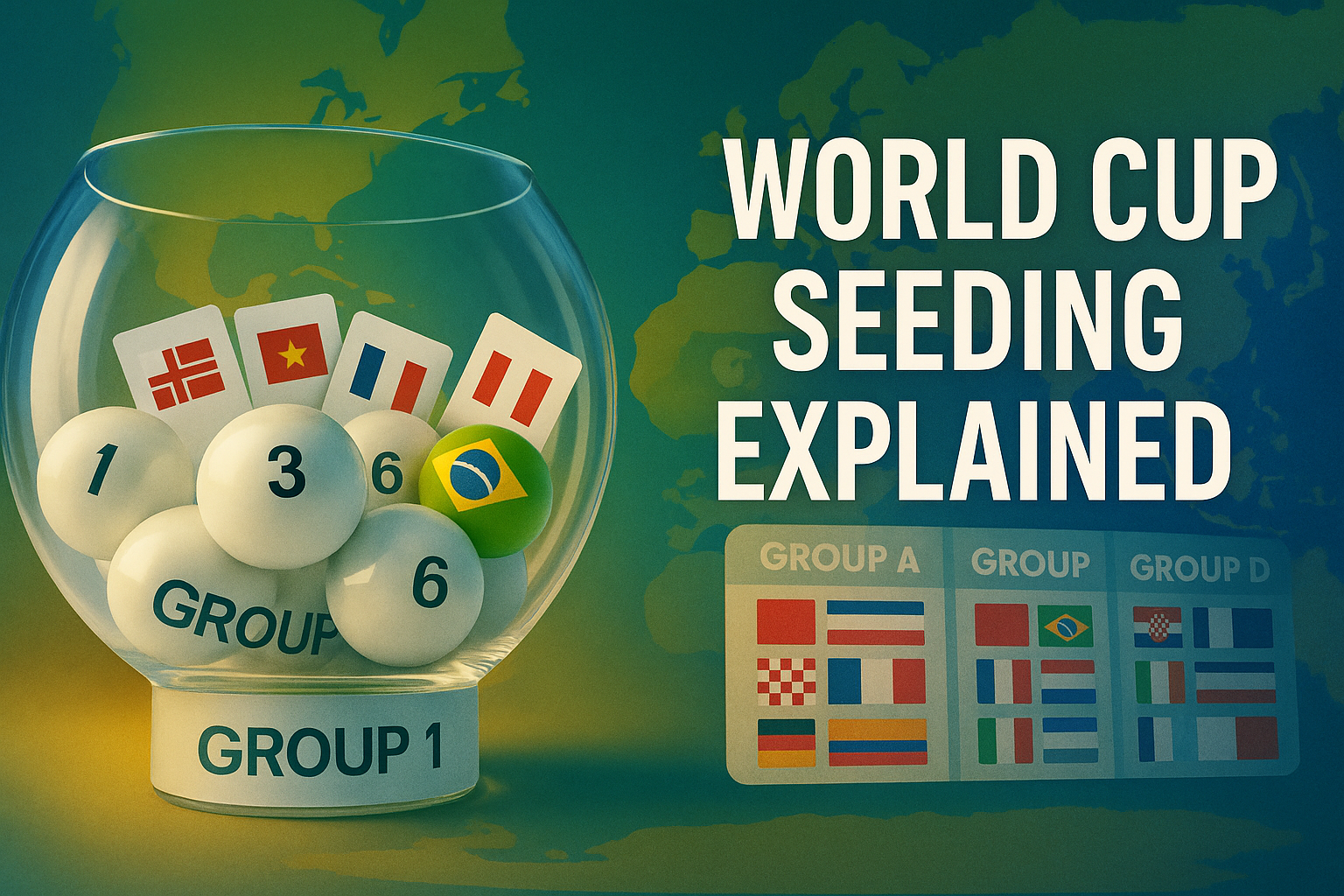
How World Cup Seeding Works: A Simple Guide to Understanding FIFA’s Ranking and Group Allocation System
Every World Cup brings excitement, strong national teams, and unforgettable matchups — but before any match is played, the tournament begins with something just as important: the seeding and group allocation process.
This article explains how FIFA organizes the World Cup draw in a simple, clear way, so fans can understand why certain countries end up in specific groups.
1. What Is Seeding?
Seeding is the method FIFA uses to distribute strong teams evenly across tournament groups.
The goal is to avoid placing too many top-ranked nations in the same group, ensuring fairness and balance.
FIFA primarily uses:
- FIFA Men’s World Ranking
- Performance in recent tournaments
- Confederation distribution rules
These factors help determine which teams are placed in Pot 1, Pot 2, Pot 3, and Pot 4 before the draw.
2. How the Ranking System Influences Seeding
The FIFA World Ranking is a point-based calculation that considers:
- Match results
- Opponent strength
- Match importance (e.g., qualifiers, tournaments, friendlies)
- Confederation weighting
The higher a team’s ranking, the more likely they are placed in Pot 1 or Pot 2, avoiding very difficult groups.
For example, top-ranked nations such as France, Brazil, Spain, or Argentina usually start in Pot 1.
3. Confederation Rules (Very Important)
FIFA also applies limits to ensure geographic balance:
- No group can contain more than one team from the same confederation,
except UEFA, which can have up to two teams per group.
This prevents, for example, a group having two South American teams or three Asian teams.
This rule is one reason why some matchups appear more frequently while others rarely occur.
4. How the Draw Is Conducted
The World Cup draw follows a specific order:
- Pot 1 teams are assigned to Groups A–H
- Pot 2 teams are placed next
- Pot 3 teams follow
- Pot 4 teams are drawn last
After each placement, FIFA checks for confederation conflicts before confirming the group.
This step-by-step method ensures fairness and transparency.
5. Why Understanding Seeding Matters for Fans
Knowing how seeding works helps fans understand:
- Why certain groups appear “stronger” or “weaker”
- Why a top nation may avoid difficult matchups early
- How mid-ranked teams can get favorable or challenging groups
- Why upsets are always possible despite careful planning
It adds a deeper layer of insight when watching the tournament unfold.
Conclusion
The World Cup seeding system is designed to create balance and fairness while maintaining the excitement of unpredictable matchups.
By understanding how rankings, confederations, and pot allocations work, fans can appreciate the draw process just as much as the tournament itself.
Whether your favorite team lands in a tough group or a balanced one, the structure behind the draw plays a crucial role in shaping the entire tournament.